Illinois’ New Character Development Project Aims to Cultivate Neighborliness
by Sharita Forrest, Illinois News Bureau / Sep 3, 2026
The Alma Project — a character education initiative that promotes neighborliness and a sense of purpose in undergraduate students through community-engaged learning — recently launched at the University of Illinois Urbana-Champaign campus. The project is working with faculty members to integrate related learning activities into their courses.
A new character development project at the University of Illinois Urbana-Champaign aims to cultivate neighborliness and a sense of purpose in undergraduate students through community-based learning opportunities and academic content. The project aims to strengthen students’ sense of belonging and hone their understanding of how their choices and actions help them be better neighbors, the organizers say.
The “Alma Project: Promoting Neighborliness at the University of Illinois Urbana-Champaign” — a collaborative initiative with the University of Birmingham’s Jubilee Centre for Character and Virtues — is funded by a three-year, $913,000 Institutional Impact Grant from the Educating Character Initiative, a project of the Program for Leadership and Character at Wake Forest University. The Educating Character Initiative is funded by Lilly Endowment Inc. Illinois is one of only nine land-grant universities and 49 institutions overall to receive funding for character education initiatives on their campuses.
Neighborliness is defined by the project leaders as “compassion, care, and respect for all those in one’s community.” To frame neighborliness as a character virtue that resonates with the campus culture, The Alma Project leverages the symbolism of one of the Urbana campus’s most iconic landmarks — Lorado Taft’s Alma Mater statue. Bridging the gap between global prestige and local engagement, The Alma Project aims to inspire students and faculty members to be active, contributing neighbors to the broader community.
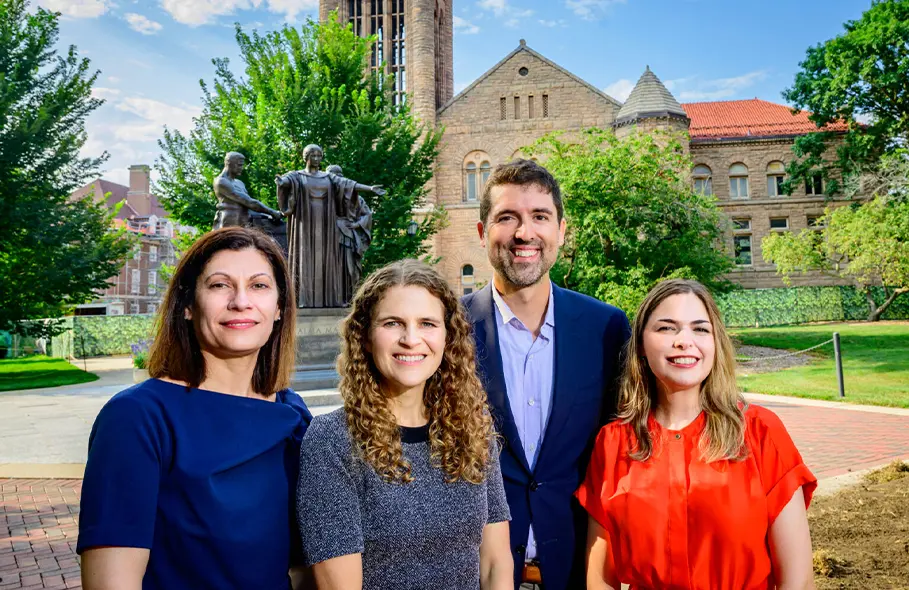
Educational psychology's Chris Napolitano and Kaylin Ratner, College of Education Dean Chrystalla Mouza, and director of public engagement Emily Stone are the principal investigators on the project. Olivia Hagedorn, who was a founding principal investigator of the project and the We CU Community Engaged Scholars postdoctoral researcher at Illinois, is now an associate co-op faculty coordinator at Northeastern University.
University of Birmingham Jubilee Centre faculty members Shane McLoughlin, a professor of character education; Tom Harrison, a professor of education and the centre’s director; and Andrew Peterson, a professor of character and citizenship education and the centre’s deputy director, are collaborating on the project as well.
With funding from a Capacity-Building Grant from the Educating Character Initiative, the project team engaged campus and community stakeholders in conversations to build support for The Alma Project and gain insight on embedding neighborliness in academic courses across the curriculum.
“One of the things that’s been really exciting for us is that we’ve gone all around the campus in this last year and talked to so many university leaders, faculty members, students, community members and religious leaders to get a sense for whether folks here in Illinois were receptive to this idea,” Napolitano said. “Overwhelmingly, from the highest parts of the university leadership through faculty and graduate students, people are ready for this. They are excited about the opportunity to try this and see how to fit character education into a public land-grant university in a responsible and responsive way.”
Stone said that she felt inspired by those listening sessions and conversations. While “our instructors are, of course, interested in shaping excellent students who are the top in their field, they also want more for their students. They want to graduate kind, compassionate people into the world, and they believe that their courses are places where they can have an influence and shape that. What we’re trying to do is offer more tools that can simultaneously support that and our instructors, shaping our campus into a place that is a really great neighbor to surrounding communities.”
The deans of the Gies College of Business, The Grainger College of Engineering, the College of Liberal Arts and Sciences and the School of Social Work, as well as department heads and directors of centers wrote letters expressing enthusiastic support for the project, highlighting its natural alignment with their educational objectives. Mouza wrote that the college will serve as a cornerstone of the project, providing administrative support and other resources — including the time and expertise of Stone, who has experience leading large-scale community-based learning initiatives — to ensure the project’s success.
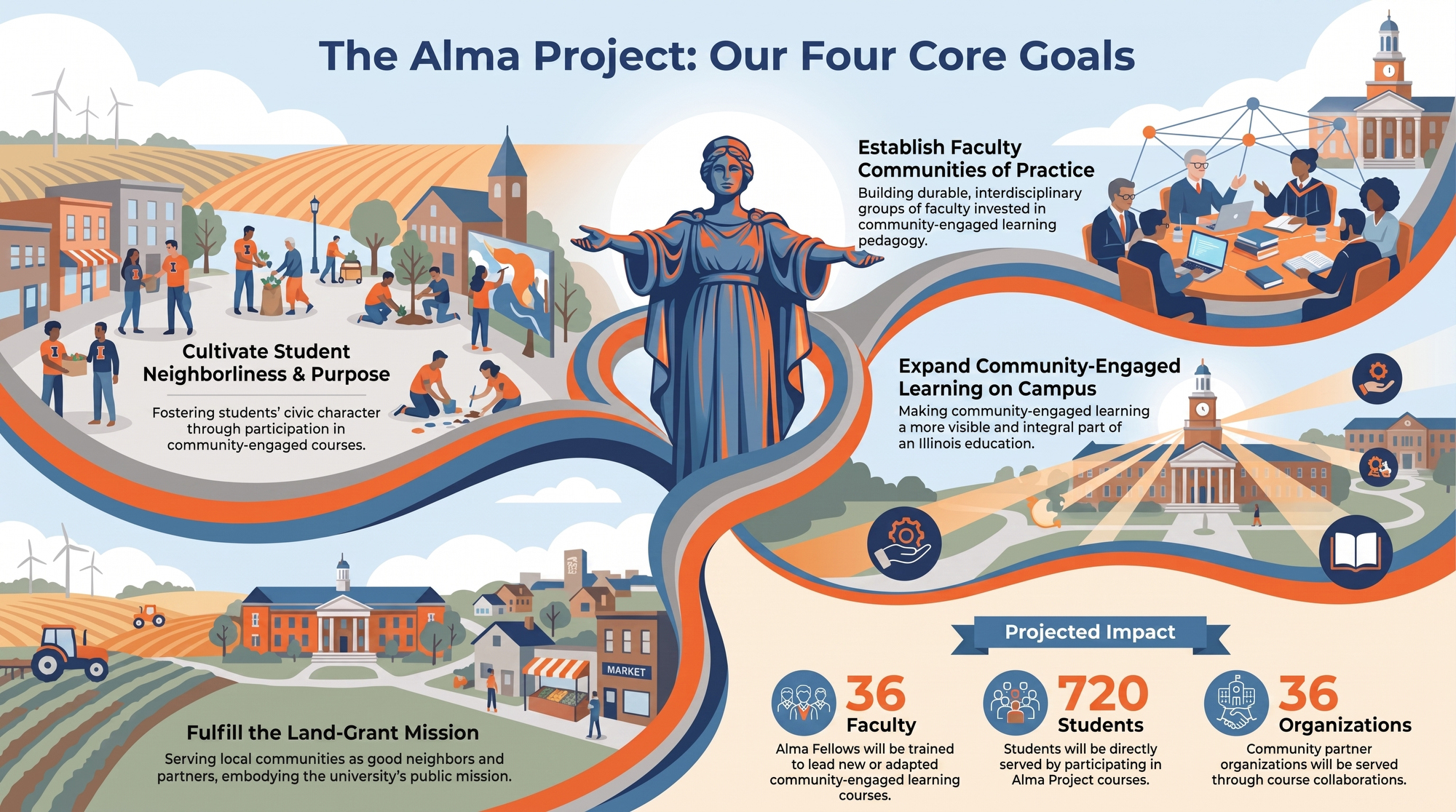
The project’s goal is to provide 36 new or adapted courses that center on neighborliness — spanning all disciplines and academic levels and taught by trained Alma Faculty Fellows. These courses will be matched with local nonprofit organizations to provide students with experiential learning opportunities in which they will work collaboratively with people in surrounding communities.
The We CU Community Engaged Scholars program and the School of Social Work’s Community Learning Lab, which assists Illinois faculty members in developing and refining community engagement projects, will provide support for the initiative as well by creating an online platform to share character education resources, materials and activities related to neighborliness that will be adaptable to different community-engaged learning contexts on other campuses and available to all instructors.
“The courses and programming developed under The Alma Project will foster the civic virtues and ‘neighborly’ habits that uphold democratic principles, serving as a model for our peers in higher education. This is a vital initiative that aligns perfectly with our institutional goals,” wrote Provost John Coleman in a letter affirming support for the project. “By fostering a culture of neighborliness, we empower Illinois students to see themselves as vital parts of a larger community, encouraging them to contemplate differences and approach civic challenges with empathy and respect.”
Three Senior Faculty Fellows — faculty members who excel at community-based learning projects and expressed interest in developing the Alma Faculty workshops — will be selected and work with the research team and the Jubilee Centre faculty members to develop student reflection materials and training. Instructors will pilot the learning activities in their courses in the Spring Semester 2027 and collect student feedback. That fall, 12 Alma Faculty Fellows are expected to integrate the neighborliness learning content into their courses. And in the Fall Semester 2028, the number of Faculty Fellows teaching the content will expand to 36.
By the team’s projections, at least 720 Illinois undergraduate students will go through Alma Project character education courses and about 36 community organizations will benefit from these partnerships during the first three years.
As part of the research associated with the project, feedback will be collected from the community partners and the public to investigate community perceptions of Illinois’ neighborliness and impact.
This story was originally published by the Illinois News Bureau