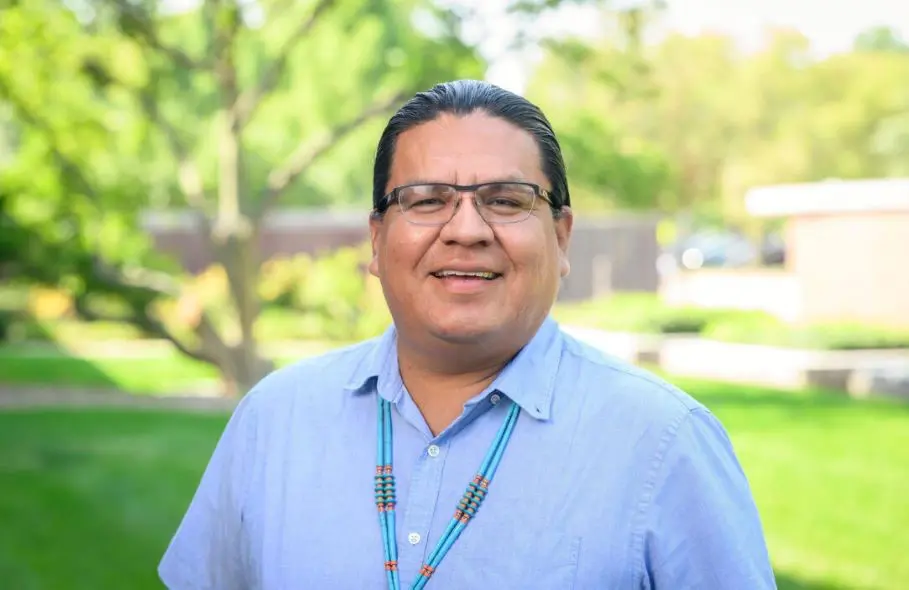
Early Career Scholars Awarded Grant to Study Long-Term Impact of Native Teacher Preparation Program
by Ashley Lawrence / Jun 24, 2026
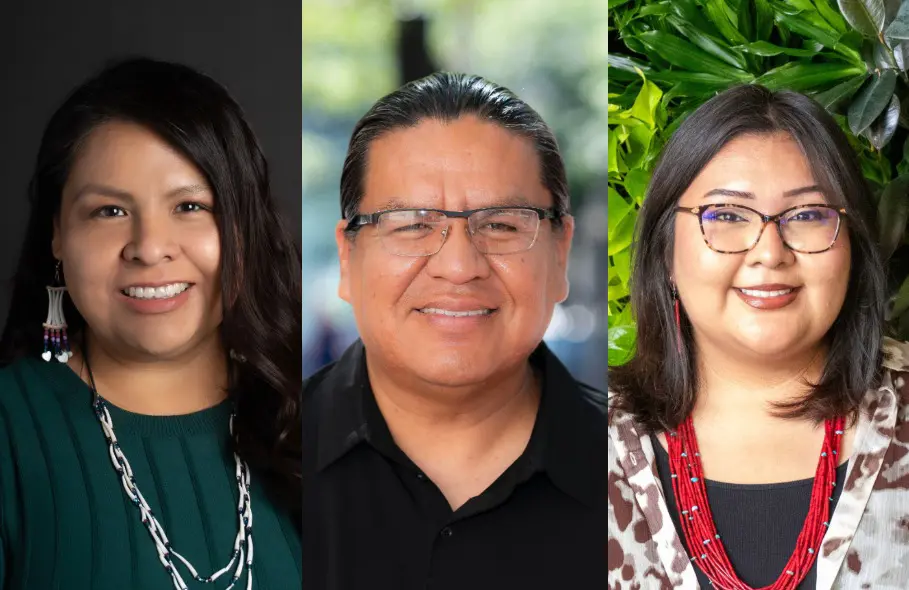
Two decades after completing a groundbreaking Native teacher preparation program together, College of Education at Illinois faculty members Jennifer Johnson and Oliver Tapaha are embarking on a new journey—one that brings them back to the very experience that shaped their careers as educators, researchers, and advocates for Indigenous Nations and communities.
Johnson and Tapaha, both assistant professors in the Department of Education Policy, Organization & Leadership, have been awarded $420,000 in funding through a Spencer Foundation Large Research Grant to examine the experiences of Native educators who graduated from a federally-funded Native teacher preparation program in the early 2000s.
The four-year project, titled Two Decades Later: Learning from Native Educators’ Experiences Trained in a Native Teacher Preparation Program, will explore how culturally grounded teacher preparation influences educator retention, leadership development, and educational self-determination in Indigenous communities.
A ‘Dream Project’ Twenty Years in the Making
For Johnson and Tapaha, the project is both scholarly and deeply personal.
“We have always talked about this project,” Tapaha says. “It’s been a dream project of ours.”
The two researchers first met more than 20 years ago as members of the same Native teacher preparation cohort. Fifteen students completed the program between 2002 and 2004, then dispersed across tribal communities and educational settings throughout the Southwest and beyond. While the cohort remained connected over the years, Johnson and Tapaha often wondered about the long-term impact of their shared experience.
“We knew there was something special and significant about the training that we had as undergraduate education students,” Johnson said. “We were able to look at our cohort and say, ‘Fourteen out of the 15 of us are still working in Indigenous education in some capacity.’ That really speaks to teacher retention.”
Their research will focus on those 15 educators, many of whom have spent decades serving Native students as classroom teachers, administrators, higher education professionals, and community leaders. Through interviews and group oral histories conducted in the tradition of Indigenous storywork, the project will examine how participants’ preparation shaped their professional journeys and commitment to Indigenous education.
Revisiting a Landmark Investment in Native Education
The study is rooted in an important historical moment.
In 1998, President Bill Clinton signed Executive Order 13096 on American Indian and Alaska Native Education, which included a goal of training 1,000 new Native educators nationwide. Federal funding supported Native teacher preparation programs at universities and tribal colleges across the country, creating pathways for Indigenous students to become teachers and return to serve their communities.
Today, Johnson and Tapaha see an opportunity to understand the lasting impact of those investments.
“Before those programs, there were very few Native American teachers in tribal communities,” Tapaha said. “Now, in some communities, nearly all of the teaching staff are Native educators. These teachers are trained from culturally and place-based perspectives, and they know their students and communities well.”
The researchers believe those outcomes matter not only for Indigenous communities but also for broader conversations about teacher preparation and retention.
Native teachers continue to represent less than one percent of public school teachers nationwide, despite evidence showing the positive impact educators can have when they share cultural knowledge, language, and lived experiences with the communities they serve.
“Teacher retention is particularly important,” Johnson said. “When educators have family and community ties, they are more likely to stay. They build relationships that extend beyond the classroom.”
Johnson experienced that firsthand growing up in the Seminole Nation, where some of her teachers had also taught previous generations of her family.
“When teachers have those relationships with the community, when you see them at the grocery store and outside the school context, that has a lot to do with relationship building,” she said.
The Spencer-funded project seeks to understand those dynamics more deeply while generating insights that could inform future Native teacher preparation programs.
In addition to documenting educators’ experiences, the research team plans to develop a framework-based model for educating, supporting, and retaining Native teachers. The project draws on Tribal Critical Race Theory (TribalCrit) and Native Nation-building frameworks, centering Indigenous perspectives and priorities throughout the research process.
Research Led by Indigenous Scholars, Centering Tribal Values
A defining feature of the project is its commitment to Indigenous research methodologies.
“We wanted to conduct a study by Indigenous scholars, with Indigenous people, for Indigenous communities and nations, using Indigenous research methodologies,” Tapaha said.
That commitment extends to the project’s research team. Johnson and Tapaha are joined by Native doctoral student Mary Smith, who will serve as a graduate research assistant on the project. Throughout the grant period, the Indigenous scholars will gain valuable research experience while contributing to community-centered work.
“I am excited to engage in the specific Indigenous research methodologies (IRMs) that we’ve structured for this project,” says Smith. “Rather than conducting interviews through a Western lens, we will be utilizing storytelling and open-ended, dialogic conversations and focus groups. As an emerging Native scholar and educator, being in community with experienced Native educators is a profound opportunity, and their stories will be vital for both my own growth and to inform and strengthen the broader community of Indigenous scholars.”
The project also places a strong emphasis on ethics, consultation, and tribal sovereignty.
Before collecting data, the researchers will seek approval and guidance from the tribal nations represented by participants in the study. Depending on the nation, that process may involve tribal Institutional Review Boards, tribal education departments, community consultations, and formal letters of support.
“We really wanted to approach this research ethically, responsibly, and relationally,” Tapaha said.
The process reflects a broader commitment to conducting research in partnership with Native communities rather than simply about them.
Community engagement will play a central role in shaping the study’s design and implementation, ensuring that tribal nations have opportunities to provide input and determine how the research can best serve their interests.
For Johnson, that approach is inseparable from larger questions of Indigenous self-determination.
“When we talk about self-determination in Indigenous education, we’re talking about a people’s inherent right to determine what type of learning is occurring, what knowledge is perpetuated, what language is being spoken, and what the conditions of education are for Indigenous children,” she said.
The researchers view Native educators as critical agents in that process—individuals who help sustain language, culture, community knowledge, and tribal sovereignty through education.
Informing the Future of Native Teacher Education
Those questions have become even more urgent amid contemporary debates surrounding public education, diversity initiatives, and educational policy.
Johnson noted that the project arrives at a time when Indigenous educational programs and funding streams face growing uncertainty.
“We really want to look at educational models that push back against one-size-fits-all approaches to teacher education,” she said. “That work becomes even more important as public education continues to face new challenges.”
The grant itself represents a significant achievement.
The Spencer Foundation Large Research Grant is among the most competitive awards in the field of education research. According to Johnson, the competition began with more than 800 applicants before being narrowed to a small group of finalists through multiple rounds of review.
For two junior faculty members launching a large-scale national research project, receiving the award was both validating and a pleasant surprise.
“We were nervous about writing for such a large grant,” Johnson said. “We thought, ‘We’ll try and see what they say.’”
When news of the award arrived, it affirmed not only the project’s scholarly merit but also the importance of Indigenous-led research in education.
“I remember talking to Jenn and saying, ‘Oh my gosh, they really see the value in the work that we put into this,’” Tapaha said.
Looking Back to Look Forward
As they prepare to reconnect with members of their original cohort, Johnson and Tapaha are excited to learn from educators whose careers have spanned more than two decades of service.
The project will document stories of resilience, leadership, and community commitment while generating knowledge that may help shape the future of Native teacher education.
It also brings the researchers’ own educational journeys full circle.
Johnson remembers writing in first grade that she wanted to become a teacher when she grew up. Tapaha recalls describing education in his teacher preparation program application as “not a profession, but a lifestyle,” inspired by the teachings of his Diné grandmother.
Today, those aspirations have evolved into a collaborative research effort that seeks to strengthen Indigenous education for future generations.
“This is a very personal project,” Tapaha said.
For Johnson and Tapaha, it is also a project grounded in hope: hope that understanding the experiences of Native educators can help communities continue to cultivate teachers, leaders, and knowledge keepers for years to come.
Related News