Q&A with Nidia Ruedas-Gracia
by Center for Social & Behavioral Science / May 6, 2026
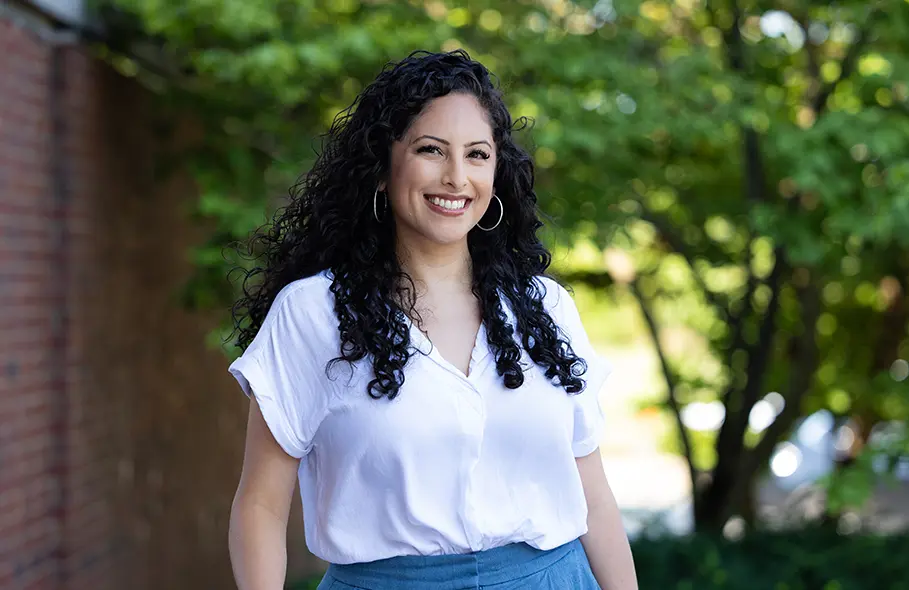
Nidia Ruedas-Gracia studies what it truly means to belong—and why it matters. Drawing on interdisciplinary approaches that span educational psychology, development, and health, her research examines belonging as a dynamic, context-sensitive process that unfolds over time. She explores how educational environments shape academic success, mental health, and physical well-being—particularly for historically marginalized and first-generation/low-income students. Her work aims to inform more equitable and supportive educational environments grounded in students’ diverse realities.
Q&A with Nidia (she/her)
🔬 Research & Big Ideas
What problem or societal challenge is your research trying to address?
My research examines how students develop a sense of belonging in educational settings and how belonging shapes not only academic success and mental health, but also physical health. I am especially interested in how belonging can “get under the skin,” influencing stress-related biological processes. By combining psychological, behavioral, and biological data, my work asks how institutional environments and everyday experiences shape well-being over time, particularly for students from historically marginalized backgrounds. Ultimately, I hope this research helps us better understand how creating more equitable and supportive educational contexts can benefit students both psychologically and physically.
⚡️ Quick Takes
Books or Podcast? Why?
Books—especially Esperanza Rising. I appreciate how it captures belonging through an intersectional lens, showing how identity, migration, family, and shifting social contexts shape a person’s sense of place in the world. That broader view of belonging resonates with my own work, which examines how people experience belonging differently across contexts and over time.
🤝 Collaboration & Connection
How has being part of the CSBS community supported your research?
Being part of the CSBS community has been helpful because it creates opportunities to connect with scholars across disciplines who are thinking about similar questions from different angles. That kind of interdisciplinary exchange is especially valuable for my work, which bridges educational psychology, health, development, and inequality.
🌱 Inspiration & Perspective
What impact do you hope your work has beyond academia?
I hope my work helps educators, universities, and community partners think more intentionally about what it takes for students to feel seen, supported, and valued. Beyond academia, I want my research to contribute to practices and policies that make educational environments more humane, equitable, and responsive to students’ lived experiences.
🎉 Fun & Personable
What’s one small thing that brings you joy during the semester?
A call from one of my nieces or nephews always brings me joy during the semester. I love hearing about how their lives are going, what they’re proud of, and what I, as their tía (aunt), can help them with.
This article was originally published by the Center for Social & Behavioral Science.