Celebrating Community, Storytelling, and Black Parent Engagement
by Cris Perez Molina, CSBS / Jun 4, 2026
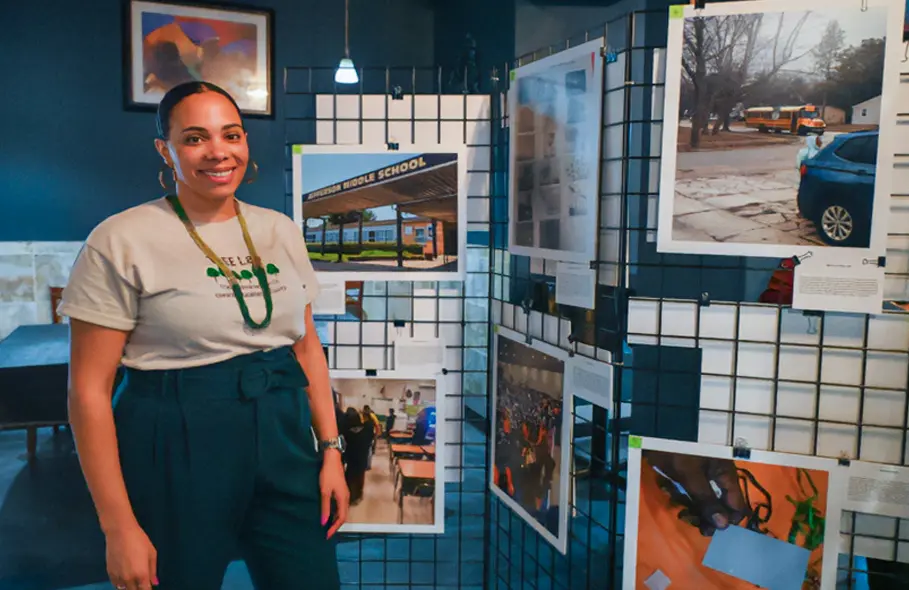
Educational Psychology assistant professor Aixa Marchand’s research through the Center for Social & Behavioral Science (CSBS) Small Grant Project was recently on display and celebrated through a photo exhibition and community reception. The event brought together community members who examined the photographs that tell the story of being a Black parent in public schools.
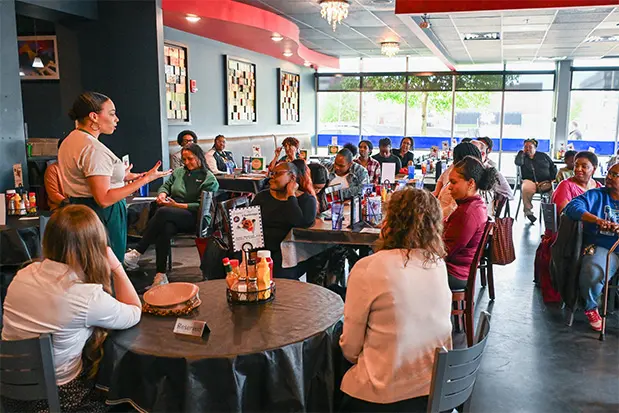
On April 28, community members, researchers, students, and families gathered at Neil St. Blues in downtown Champaign to celebrate the completion of Aixa Marchand’s CSBSI Small Grant project, Utilizing Photovoice to Understand Black Parents’ Critical Parent Engagement. Held from 5:30–7:30 p.m., the evening reception and photo exhibition brought together the people who helped shape the project: participating families, graduate and undergraduate students from Marchand’s lab, colleagues and community members, and CSBS team members.
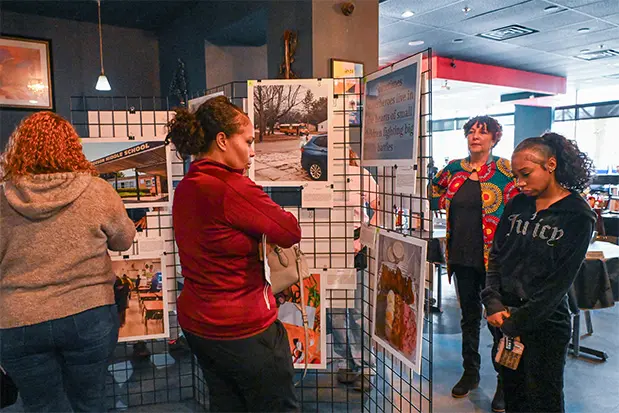
As guests arrived, the room quickly filled with conversation, laughter, and warm greetings. Many took time to personally thank Marchand for her work before moving through the exhibition space to view the photographs and narratives created through the project. Parents stood alongside their children, reflecting on the images and conversations they inspired. The evening carried both celebration and pride — pride in seeing Black families and their experiences represented and centered through research and storytelling.
A Project Rooted in Community Voice
Marchand’s project explored how Black families in Champaign-Urbana engage with their children’s public schools, particularly in ways that often go unrecognized by traditional definitions of parental involvement. The project aimed to better understand the lived experiences, strengths, challenges, and forms of advocacy Black parents navigate within local school systems.
Photovoice, a participatory research methodology centered on storytelling and visual documentation, served as the foundation for the project. Participants took photographs representing their experiences with public schools and later reflected on those experiences through collaborative discussions with the research team and fellow participants. Through this process, families contributed not only photographs, but also conversations, reflections, and insights intended to help inform future community efforts related to educational equity, family engagement, and institutional relationships.
Rooted in community-based participatory research, the project emphasized conducting research with communities rather than on them, centering the voices and expertise of Black families throughout the process. The photographs on display reflected everyday moments of parenting, advocacy, care, resilience, identity, and community connection. Together, they illustrated the complexity of Black parent engagement beyond traditional school-centered measures, offering a more nuanced and community-driven understanding of how families support and advocate for their children.
During opening remarks, Marchand thanked the families who participated in the research, the students in her lab involved in the project, and the broader community for showing up to celebrate the work. She emphasized the importance of honoring lived experience and creating opportunities for Black families to tell their stories authentically and collectively.
Reflecting on History, Advocacy, and Black Parenting
The evening’s keynote speaker, Ms. Imani Bazzell, delivered a deeply reflective talk connecting the project’s themes to the broader history of Black educational advocacy and resistance.
Drawing from personal experiences and historical milestones including Brown v. Board of Education and school desegregation efforts across the United States, Bazzell spoke about the long-standing role Black parents have played in fighting for equitable education and safer futures for their children.
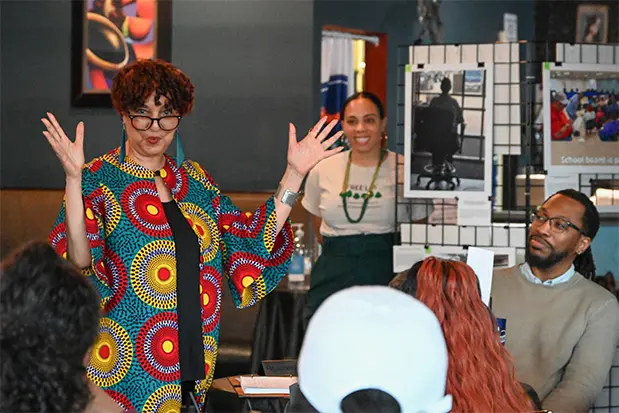
Throughout her remarks, Bazzell encouraged attendees to consider the legacy being shaped through community action, storytelling, and collective care. She spoke candidly about the realities Black families continue to navigate within educational systems while emphasizing the importance of helping children understand injustice without losing sight of their own value, identity, and power.
"We are in the process of making history as we speak," Bazzell said.
Bazzell also emphasized the importance of creating spaces where children can ask difficult questions, feel affirmed in their identities, and learn about the histories of resistance and resilience that continue to shape Black communities today.
"We can both prepare them for the world and provide space to dream and create other possibilities," she said.
Her remarks resonated deeply with attendees, many of whom nodded in agreement, reflected quietly, or exchanged knowing glances with one another as she spoke.
Continuing the Conversation
Following the keynote, Marchand thanked Bazzell for her guidance, mentorship, and partnership on the project, encouraging attendees to “give people their flowers in the moment” before presenting Bazzell with a beautiful bouquet of flowers.
Guests were then invited to share a meal together. The atmosphere throughout dinner remained warm and lively as families, students, researchers, and community members broke bread together, revisited the photographs, and continued conversations sparked by the exhibition and keynote remarks.
Marchand also shared plans to bring the exhibition to additional community spaces throughout Champaign-Urbana so more people can engage with the stories and perspectives highlighted through the project.
The evening closed not as an ending, but as a continuation of dialogue, reflection, and community connection — one grounded in storytelling, collective memory, and the ongoing work of supporting Black families and children.
What Participants Gained
By the end of the session, attendees walked away with more than new ideas. Many left with draft dissemination plans tailored to their own projects, clear next steps for engaging communities and partners, and tools they could continue refining as their research evolves. The interactive format also created opportunities for cross-campus connection and shared learning among researchers and community collaborators working across disciplines.
"One key takeaway was to consider dissemination from the very start of a research project," Marchand said. "Attending with my community partner was incredibly valuable—it connected us to university resources, others doing similar work, and created space for meaningful, ongoing dialogue. We’re excited to use the valuable resources in future projects."
Supporting Community-Engaged Research Through CSBS Small Grants
Marchand’s project was supported through the CSBS Small Grants Program, which provides seed funding for innovative social and behavioral science research at the University of Illinois Urbana-Champaign. The program supports research projects that foster collaboration, generate new research directions, and address pressing societal issues.
Projects like Utilizing Photovoice to Understand Black Parents’ Critical Parent Engagement demonstrate how community-based research can amplify lived experience, strengthen local partnerships, and create pathways for the generation of knowledge, action, and dialogue.
This article was originally published by the Center for Social & Behavioral Science